Pentesting Campaigns by persistent agents
Run compute-intensive agents for 72 hours or longer to probe deployed systems and code within your sandbox and security requirements.




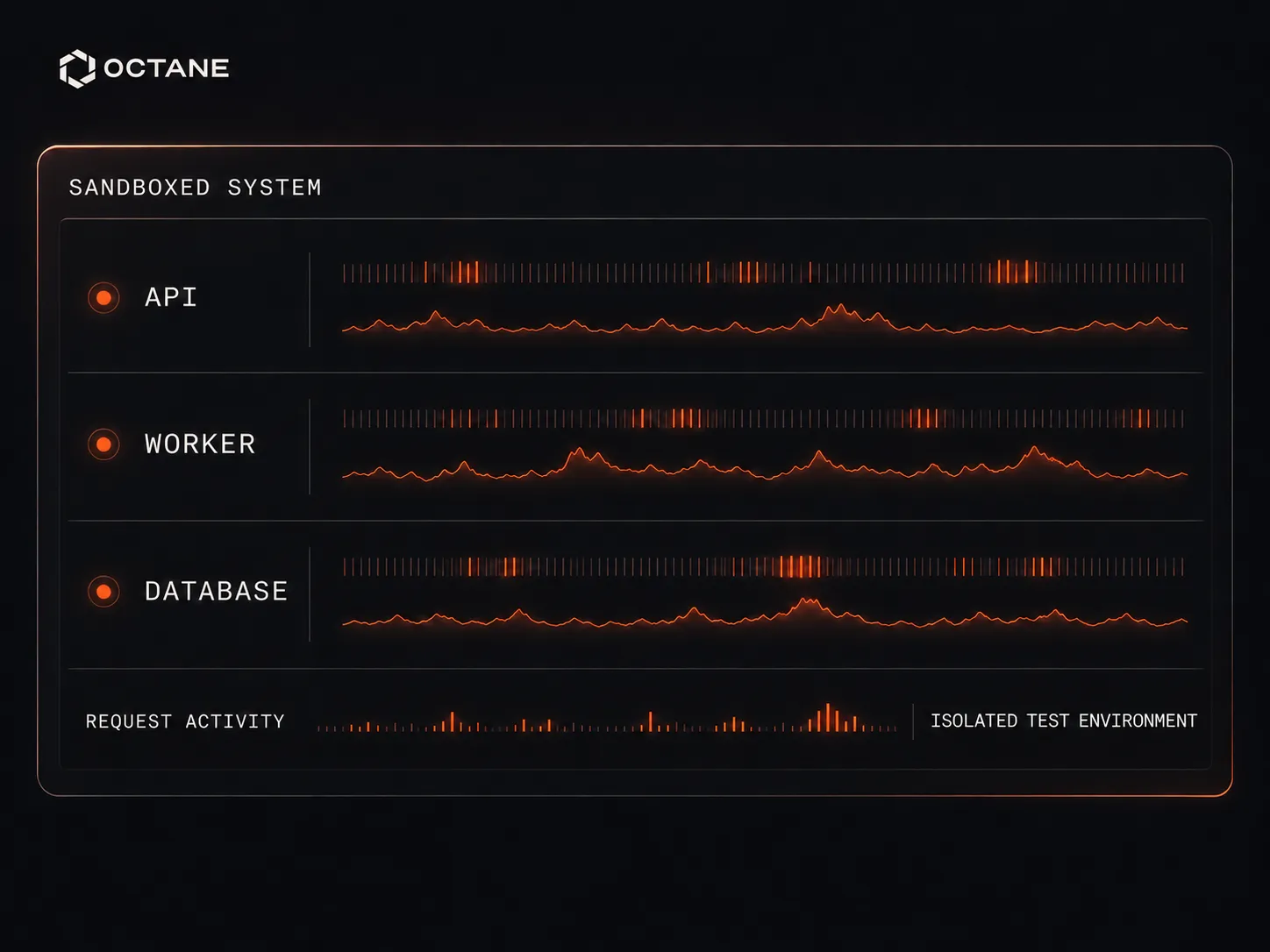
Put your deployed software to the test.
Pentesting Campaigns are Octane’s most compute-intensive agentic workflows. Agents run multi-step tests against your software and code in synthetic environments built around your system, configured by a forward-deployed engineer to follow your approved scope and security requirements.
Discuss a Campaign72+ hours of agentic probing
Agents probe running systems and code for 72 hours or longer, with campaigns extending over weeks when the scope calls for it. Sustained, multi-step testing gives agents time to follow complex paths, challenge assumptions and uncover deep bugs. Every run stays within your approved sandbox, scope and security requirements.


From scope to deep agentic probing

Scope
Work with your forward-deployed engineer to define the targets, software builds and security rules. Agree on the boundaries and the evidence needed before the search begins.

Execute
Agents run multi-step tests against the software in scope. Your engineer steers the research, investigates leads and shares progress throughout the Campaign.
Reproduce
Findings are reproduced from a clean state and delivered with proof, root cause and remediation. A coverage ledger records the results, open leads and paths the search could not reach.
Proof for every finding. A clear record of coverage.
Findings come with:
- A REPRODUCIBLE SEQUENCE AND WORKING PROOF
- ROOT CAUSE AND THE BROKEN SECURITY RULE
- SEVERITY WITH STATED PRECONDITIONS
- A FIX AND TEST OR REMEDIATION GUIDANCE
Campaigns are right for:
- COMPLEX DEPLOYED SYSTEMS
- HIGH-STAKES QUESTIONS THAT NEED DEEPER RESEARCH
- INTERACTIONS ACROSS PROGRAMS AND SERVICES
- DEPENDENCY BEHAVIOR WITHIN AN AGREED SCOPE
- TEAMS EXTENDING AUDITS, VERIFICATION AND BUG BOUNTIES
Know what was tested and what remains open.
A clean result is only as useful as its boundaries. The coverage ledger makes those boundaries visible. See the exact builds and security rules tested, the sequence counts and starting states, and whether each rule held or broke. Unresolved leads retain their evidence. Paths that could not be exercised are recorded with the reason why.
Bring your hardest security question.
Work with an Octane forward-deployed engineer to define the target, the security rules and the evidence you need.
Discuss a Campaign
FAQ